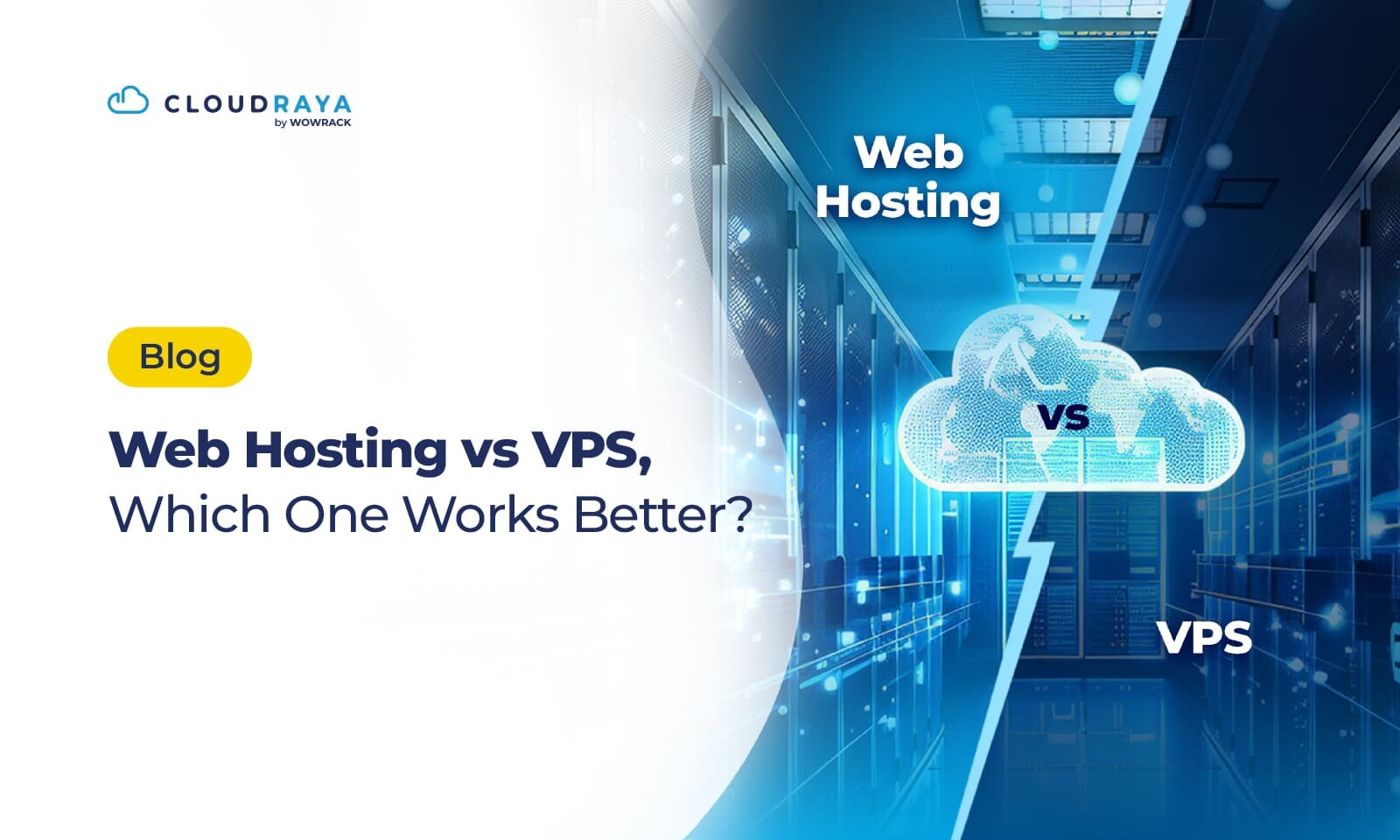
The difference between web hosting and VPS often confuses beginners who are just getting started in the cloud world.
Not fully understanding how they differ can lead to choosing the wrong service, which can become a serious issue.
Your website or application could end up running slowly, creating a poor user experience. On top of that, you might spend more than your planned budget without realizing it.
Both of these can negatively impact your business in the long run. That’s why understanding the difference between web hosting and VPS is something you really shouldn’t skip.
In this article, you’ll learn the differences between web hosting and VPS in terms of function, performance, pricing, scalability, security, and their types.
Before we break down the differences, let’s start with the basics, what web hosting and VPS actually mean.
What is Web Hosting?
Web hosting is a service used to store your website files so they can be accessed over the internet.
In this setup, one server is usually shared by multiple users at the same time. That means you’ll be sharing server resources with other users.
Because of this, web hosting typically doesn’t require complicated management. You don’t need advanced technical skills to use it.
To make it easier to understand, think of web hosting like renting a shop in a shopping mall.
The mall represents the hosting provider, and it rents out many shop spaces inside it.
As a user, you’re one of the tenants renting a shop. You get your own space to run your business, but since you’re in the same building, you share resources like electricity, water, and maintenance with other tenants.
When comparing web hosting and VPS, web hosting is often the first choice because it’s more affordable, practical, and beginner-friendly.
It’s ideal for simple websites like blogs, company profiles, or landing pages.
Most server-related tasks are handled by the provider, so you can focus on managing your website content instead of worrying about technical configurations.
What is VPS?
VPS (Virtual Private Server) is a virtual server that provides dedicated resources within a physical server.
This means you get your own portion of resources without sharing them with other users, giving you more control and flexibility.
Because of this higher level of control, VPS also requires more technical knowledge compared to regular web hosting, and this is one of the key differences between the two.
VPS gives you the freedom to install your own software, configure the server, adjust resource allocation, and manage security based on your needs.
However, this flexibility also means you need a better understanding of how servers work.
VPS is commonly used for more complex applications or websites with higher traffic.
What’s the Difference Between Web Hosting and VPS?
The main differences between web hosting and VPS lie in control, resource allocation, and flexibility in managing the server.
Let’s break it down further:
Function
Web hosting and VPS serve different purposes.
Web hosting is mainly designed for basic needs, such as static websites or CMS-based platforms. Everything is usually ready to use without requiring technical setup.
On the other hand, VPS has a much broader function. You can run backend systems, large databases, automation tools, and even use it as a development environment.
So in simple terms:
- Web hosting is suitable for beginners
- VPS is better for users who need deeper control and flexibility
Pricing
Another clear difference between web hosting and VPS is the pricing.
Web hosting is generally more affordable because the server resources are shared among multiple users. It also typically includes server maintenance handled by the provider.
In contrast, VPS tends to be more expensive because it provides dedicated resources.
However, the higher price comes with better performance, flexibility, and security, making it worth the investment for many users.
Scalability
When it comes to scalability, VPS clearly has an advantage.
Web hosting offers limited resources, making it difficult to scale as your needs grow.
Meanwhile, VPS allows you to upgrade resources like CPU, RAM, and storage easily whenever needed, often without downtime.
This makes VPS a better choice for growing businesses or applications with fluctuating traffic.
Security
Security is another important factor that sets web hosting and VPS apart.
In web hosting, security is fully managed by the provider. Users have limited control over their environment.
There’s also a higher risk because the environment is shared. If one user on the server faces a security issue, others might be affected as well.
With VPS, you get better isolation between users. You can also configure your own firewall and security system to match your needs.
That’s why VPS is often the preferred option when security is a top priority, especially for sensitive data or critical applications.
Performance
Performance is heavily influenced by the available server resources.
In web hosting, performance can decrease if other users on the same server consume too many resources.
With VPS, performance is more stable because the resources are dedicated to you.
This makes VPS ideal for high-traffic websites or applications that require fast and consistent response times.
Comparison Summary
| Aspect | Web Hosting | VPS |
| Function | Basic use (static websites, CMS) | Advanced use (backend, automation, development) |
| Pricing | More affordable | Higher cost but better value |
| Scalability | Limited | Easily scalable |
| Security | Managed by provider, limited control | More secure with custom control |
| Performance | Can fluctuate | Stable and consistent |
Types of VPS
VPS types are usually categorized based on the operating system used. Here are some common ones:
-
VPS Windows
Uses Windows Server as the operating system.
This type is suitable for .NET-based applications or software that requires a graphical interface (GUI).
It’s also easier to use for people who are already familiar with the Windows environment.
-
VPS MikroTik
Uses MikroTik RouterOS as the operating system.
This type is commonly used for network simulation or real-world network implementation. It’s especially popular among network engineers.
-
VPS Forex
Designed specifically for automated trading.
It offers low latency, high stability, and reliable uptime, making it ideal for running trading bots 24/7 without interruptions.
-
VPS Linux
The most commonly used type of VPS.
It runs on Linux-based operating systems like Ubuntu or CentOS.
Because of its flexibility and relatively affordable cost, VPS Linux is widely used by developers.
Before choosing a VPS, it’s important to understand your project's needs and goals.
You should also choose a reliable provider that offers strong security, stable performance, and multiple regions for better accessibility, like CloudRaya.
CloudRaya offers ISO 27001-certified security, reliable performance, high scalability, and multiple region options in Indonesia and the US.
Types of Hosting
Hosting also comes in different types that you can choose based on your needs:
-
Shared Hosting
Shared hosting is used by multiple users on the same server.
It’s the most affordable option, but it comes with limited performance and resources.
That’s why it’s best suited for lightweight websites with low traffic.
-
Cloud Hosting
Compared to shared hosting, cloud hosting offers more stable performance.
This is because it uses multiple servers and larger resource pools.
It’s a great choice for projects that require better performance and scalability.
-
WordPress Hosting
WordPress hosting is specifically optimized for WordPress-based websites.
It doesn’t require much technical knowledge, making it a great option for beginners with relatively simple needs.
Conclusion
From the explanation above, it’s clear that web hosting and VPS have significant differences in terms of function, performance, security, pricing, and scalability.
Web hosting is more suitable for lightweight use cases, such as running websites with stable and moderate traffic.
On the other hand, VPS is ideal for more complex needs, such as running applications or handling higher traffic.