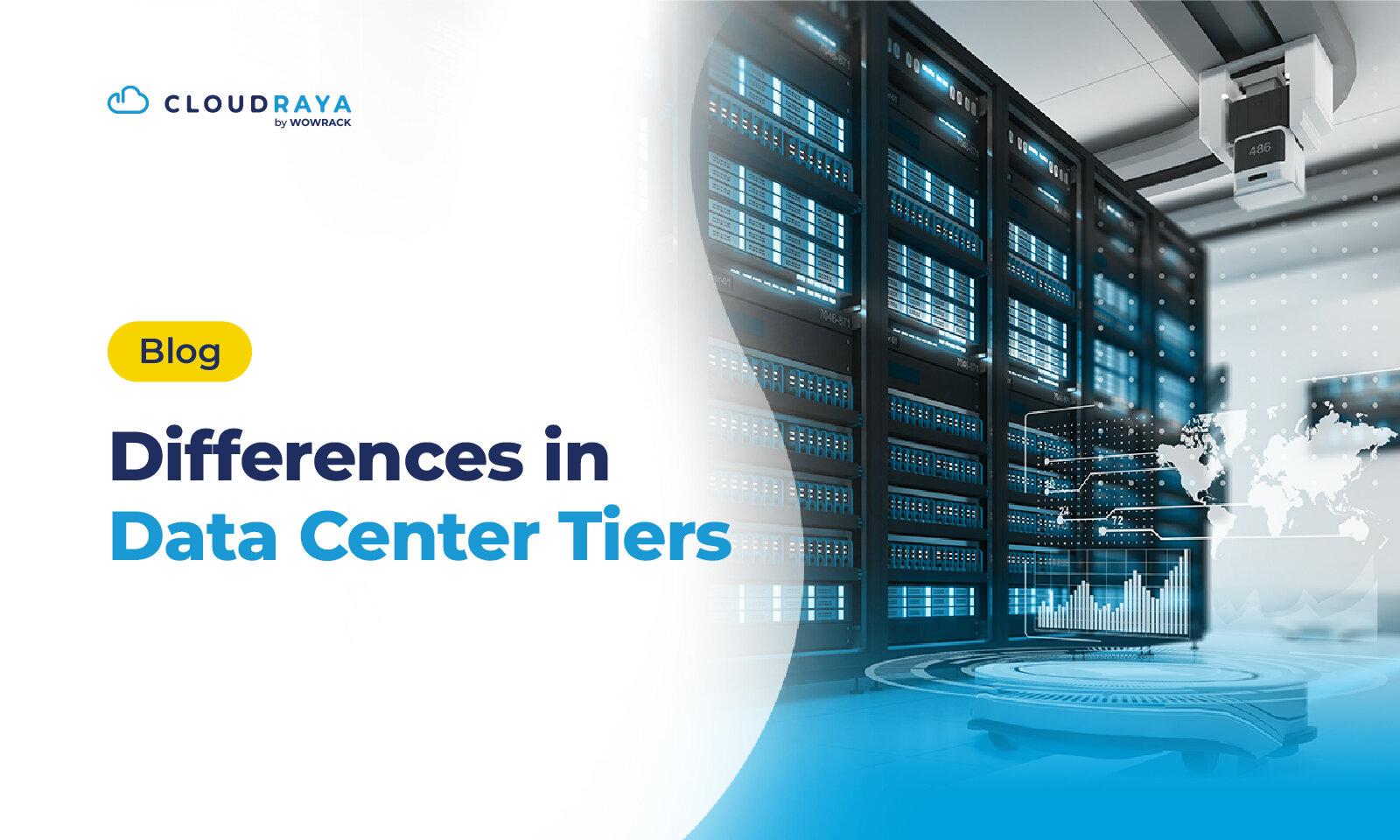
What comes to mind when you hear “Data Center”?
At its core, a data center is exactly what it sounds like a centralized facility where digital data is stored and managed so it can be accessed online.
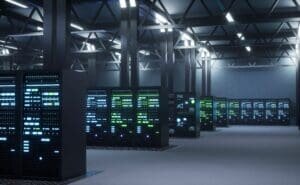
Typically, a data center is a dedicated room or building filled with neatly arranged server racks, supported by continuous power, advanced cooling systems, and high-speed network connectivity.
But here’s something many people don’t realize: data centers come in different tiers.
These tiers exist to objectively measure a data center’s quality, reliability, and resilience. And yes, understanding them can make a real difference when choosing infrastructure for your business.
In this article, we’ll walk you through how data center tiers work, why they matter, and how to choose the right tier for your digital needs.
Stick around, you might pick up insights that help you make smarter, more cost-effective infrastructure decisions.
So, What Is a Data Center?
Simply put, a data center is a purpose-built facility that houses servers and networking equipment designed to keep digital data secure, accessible, and available at all times.
Everything we access online websites, applications, social media platforms—runs on servers located inside data centers.
These servers operate 24/7, handling requests from users across the internet. When you open a website or app, your request is sent to a server in a data center, processed there, and then returned to your device in milliseconds.
To ensure uninterrupted service, data centers rely on multiple layers of infrastructure, including:
- Specialized cooling systems
- Redundant power supplies
- High-speed network connections
- Strict physical and digital security
All of these systems are continuously monitored to keep services running smoothly, even when issues arise.
A modern data center is built with high standards for power, cooling, security, and networking, so digital services stay online without disruption. Each layer of infrastructure complements the others to ensure data remains available, fast, and secure, even if one component fails.
Before global standards existed, every company had its own definition of what a “reliable” data center looked like. This made it difficult for businesses to objectively compare providers.
To solve this, the Uptime Institute introduced a global classification system known as data center tiers. This system doesn’t simply rank data centers, it evaluates their design, redundancy, and overall reliability.
Today, the tier system has become a universal language in the data center industry, evolving alongside technological advancements and growing business demands.
And this is where data center tiers help you measure, compare, and choose the right infrastructure investment, keeping your business secure and scalable.
So, what exactly are data center tiers, and why do they exist? Let’s break it down step by step.
How Do Data Center Tiers Actually Work?
In simple terms, data center tiers are a classification system used to define the reliability and availability of a data center’s infrastructure.
The Uptime Institute categorizes data centers into four tiers, ranging from Tier I (basic capacity) to Tier IV (fault tolerant).
Each tier follows specific standards covering power backup, cooling systems, redundancy, and distribution paths. The higher the tier, the lower the risk of downtime.
For example:
- Tier I offers around 99.671% uptime, which can mean up to 28 hours of downtime per year.
- Tier IV delivers 99.995% uptime, limiting downtime to roughly 26 minutes per year.
Importantly, the tier system doesn’t mandate specific vendors or hardware. What matters is whether the data center meets the required performance and resilience criteria. This allows flexibility and innovation, without compromising reliability.
Key Components That Determine Data Center Tiers
You might be wondering, “What actually determines whether a data center is Tier I or Tier IV?”
The answer lies in three main components:
- Power systems
- Cooling systems
- Redundancy (backup infrastructure)
The more layered and resilient these systems are, the higher the tier a data center can achieve.
Let’s take a closer look at each data center tier, including their characteristics, advantages, and ideal use cases.
Tier I – Basic Capacity
Tier I is the entry-level tier in the data center world. It uses a single path for power and cooling, with no backup components.
If one system fails, the entire operation can be affected. Maintenance also requires a full shutdown.
Key characteristics of Tier I:
- Single power and cooling distribution path
- No redundancy or backup systems
- Maintenance requires complete downtime
- Highest downtime risk (up to 28 hours per year)
- Lowest construction and operational costs
Best for:
Startups, small businesses, or non-critical websites that can tolerate occasional downtime.
Tier II – Redundant Capacity Components
Tier II takes things one step further by adding N+1 redundancy for key components such as UPS units or generators.
However, it still relies on a single distribution path, meaning downtime is still possible if that path fails.
Key characteristics of Tier II:
- Backup components for critical systems (power or cooling)
- Single distribution path
- Maintenance may still require partial or full shutdown
- Downtime reduced to around 22 hours per year
Best for:
Small to medium-sized businesses that need better reliability without significantly higher costs.
Tier III – Concurrently Maintainable
At Tier III, all critical components are backed up, and the data center uses multiple distribution paths.
This allows maintenance to be performed without shutting down services, keeping systems online during scheduled work.
Key characteristics of Tier III:
- Dual power and cooling distribution paths
- N+1 redundancy across all critical components
- Maintenance without downtime (excluding major disasters)
- Minimal downtime—about 1.6 hours per year
Best for:
E-commerce platforms, fintech companies, healthcare services, and cloud providers that require near-constant availability.
Tier IV – Fault Tolerant
Tier IV represents the highest level of data center resilience.
All systems are fully redundant and physically isolated, typically using 2N or 2N+1 configurations. A failure in one system will not impact operations at all.
Even during a total power outage, cooling and services continue to run seamlessly.
Key characteristics of Tier IV:
- Fully redundant power, cooling, and network infrastructure
- Multiple independent and isolated distribution paths
- Instant failover with no service interruption
- Maximum downtime of just 26 minutes per year
Best for:
Multinational corporations, financial institutions, and mission-critical operations that demand nonstop availability.
Data Center Tier Comparison
Here’s a quick overview to help you compare each tier:
| Criteria | Tier I | Tier II | Tier III | Tier IV |
| Core Concept | Basic Capacity | Redundant Components | Concurrent Maintenance | Fault Tolerant |
| Redundancy | None | N+1 | N+1 across systems | 2N / 2N+1 |
| Distribution Paths | Single | Single | Dual | Dual, fully isolated |
| Uptime | 99.671% | 99.741% | 99.982% | 99.995% |
| Annual Downtime | 28 hours | 22 hours | 1.6 hours | 26 minutes |
| Maintenance | Full shutdown | Partial/Full | No shutdown | No shutdown |
| Investment | Low | Medium | High | Very high |
| Best For | Non-critical sites | SMEs | E-commerce, fintech | Enterprise & finance |
Which Data Center Tier Should You Choose?
Still unsure which tier fits your needs? Start by evaluating your business requirements.
If you’re running a simple website—such as a school site or company profile—Tier I may be sufficient and budget-friendly.
For growing SMEs that require better uptime without excessive costs, Tier II offers a good balance of reliability and efficiency.
However, if you manage e-commerce platforms, fintech services, or healthcare systems that require 24/7 availability, Tier III or Tier IV is essential to minimize downtime and protect business continuity.
Conclusion
Data centers—the backbone of digital services, come in different tiers, each offering varying levels of reliability, performance, and cost. This allows businesses to choose infrastructure that aligns with both operational needs and budget.
Think of data center tiers like school accreditations: the higher the level, the better the facilities and overall quality.
CloudRaya, as a public cloud platform provider, operates multiple data centers across Indonesia, including Jakarta, Surabaya, Medan, and Denpasar, as well as Seattle, USA.
CloudRaya currently offers Tier III data centers in Jakarta and Surabaya, and Tier II data centers in Medan and Surabaya, giving you flexibility to choose the most strategic region for your business.
You can explore detailed data center information directly through our panel at panel.cloudraya.com.
We hope this article helps you choose a data center that fits your needs and budget. Because as we know, a data center is more than just a room full of servers, it’s the foundation of a fast, secure, and scalable digital ecosystem.
Choose the right tier, minimize downtime, and keep your business moving forward with confidence.
Pick the right tier, and be part of the digital future.